
About the course...
Most of us draw from more than one therapeutic theory in our work. But how do we integrate different approaches into one coherent way of understanding & helping our clients? Even with the same client, we may think psychodynamically about early relationships and defences, cognitively about beliefs and interpretations, behaviourally about patterns of avoidance, systemically about the relationships and contexts shaping the client’s life, and experientially about what is happening in the room. How do these different ways of understanding the client fit together? Do they point to entirely different therapeutic processes? Or do they sometimes use different language to describe similar processes? In this live seminar, we’ll have the opportunity to learn from Dr. Paul Wachtel, one of the pioneers of psychotherapy integration, as he takes us inside the evolution of his own integrative thinking. Dr. Wachtel began his clinical work with a psychodynamic foundation. He will discuss how and why he added first behavioural, then family-systems, then humanistic-experiential, and finally third-wave cognitive-behavioural perspectives. He will also explore how the process of integration changed his understanding of each perspective. His “psychodynamic” thinking is no longer what it was when he began incorporating these other approaches. At the same time, using these perspectives within a psychodynamic context has also reshaped how he understands them. Through clinical case examples, Dr. Wachtel will show what this integrative thinking looks like in the therapy room.
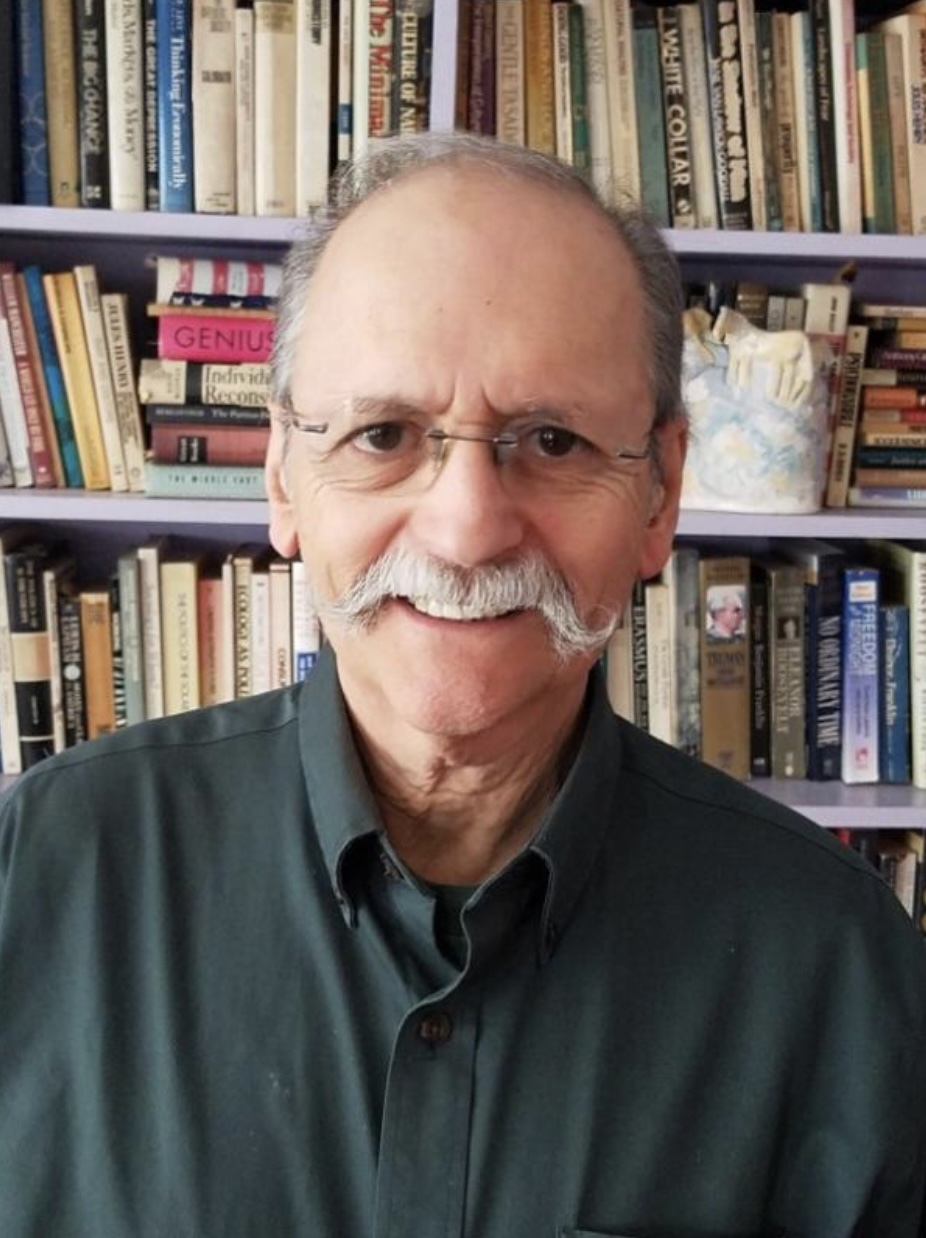
Dr. Paul Wachtel
Paul L. Wachtel is a Distinguished Professor of Psychology at CCNY. He did his undergraduate studies at Columbia and received his doctorate in clinical psychology at Yale. He is a graduate of the New York University postdoctoral program in psychoanalysis and psychotherapy and is an adjunct faculty member there. He was a cofounder of the Society for the Exploration of Psychotherapy Integration (SEPI) and is a past president of that organization. He has lectured and given workshops throughout North America, South America, Europe, and Asia both on clinical matters and on the applications of psychological theory and research to the pressing social problems of our times. He is a Fellow of Divisions 12, 29, and 39 of the American Psychological Association and was the winner of the 2010 Hans H. Strupp Award for Psychoanalytic Writing, Teaching, and Research, the 2012 Distinguished Psychologist Award by Division 29 (Psychotherapy) of APA, the 2013 Scholarship and Research Award by Division 39 (Psychoanalysis) of APA, and the First Annual Sidney J. Blatt Award for Outstanding Contributions to Psychotherapy, Scholarship, Education and Practice in 2018.
Learning Objectives Following this seminar, you will be able to...
Learning Objective #1
Describe the difference between interpreting a thought or feeling that has been warded off or defended against & making room for it and discuss the clinical implications of this difference
Learning Objective #2
Be able to articulate the ways in which what psychodynamic therapists call interpretations converge with what behavioral and cognitive-behavioral therapists call exposure
Learning Objective #3
Be able to explain how therapeutically effective corrective emotional experiences need to be addressed both to experiences in the therapeutic relationship and to experiences with other people in daily life
Psychotherapy Integration is a Two-Way Street
We hope you can join us! Have questions? Please contact Dr. Allyson Smith (613) 806-2107 [email protected] And consider joining us for the full series! Please contact Allyson for details.
$69.00